
Record group entities and agreements
The Group entities tab lists each entity with its jurisdiction; Agreements holds the signed intra-group agreements a transaction can cite (a distribution agreement for Germany, an intra-group services agreement). A transaction without an agreement is recorded as such.
Build the transaction inventory
The Transactions tab counts controlled transactions, how many are approved for documentation and how many are still being analysed. Record a transaction adds one with the tested party, counterparty, amount and method. The sample inventory holds three: a sale or purchase of goods at €4,200,000.00 (TNMM, approved), a licence of intangibles at €126,000.00 (method not chosen, recorded) and a provision of services at €860,000.00 (cost plus, recorded).
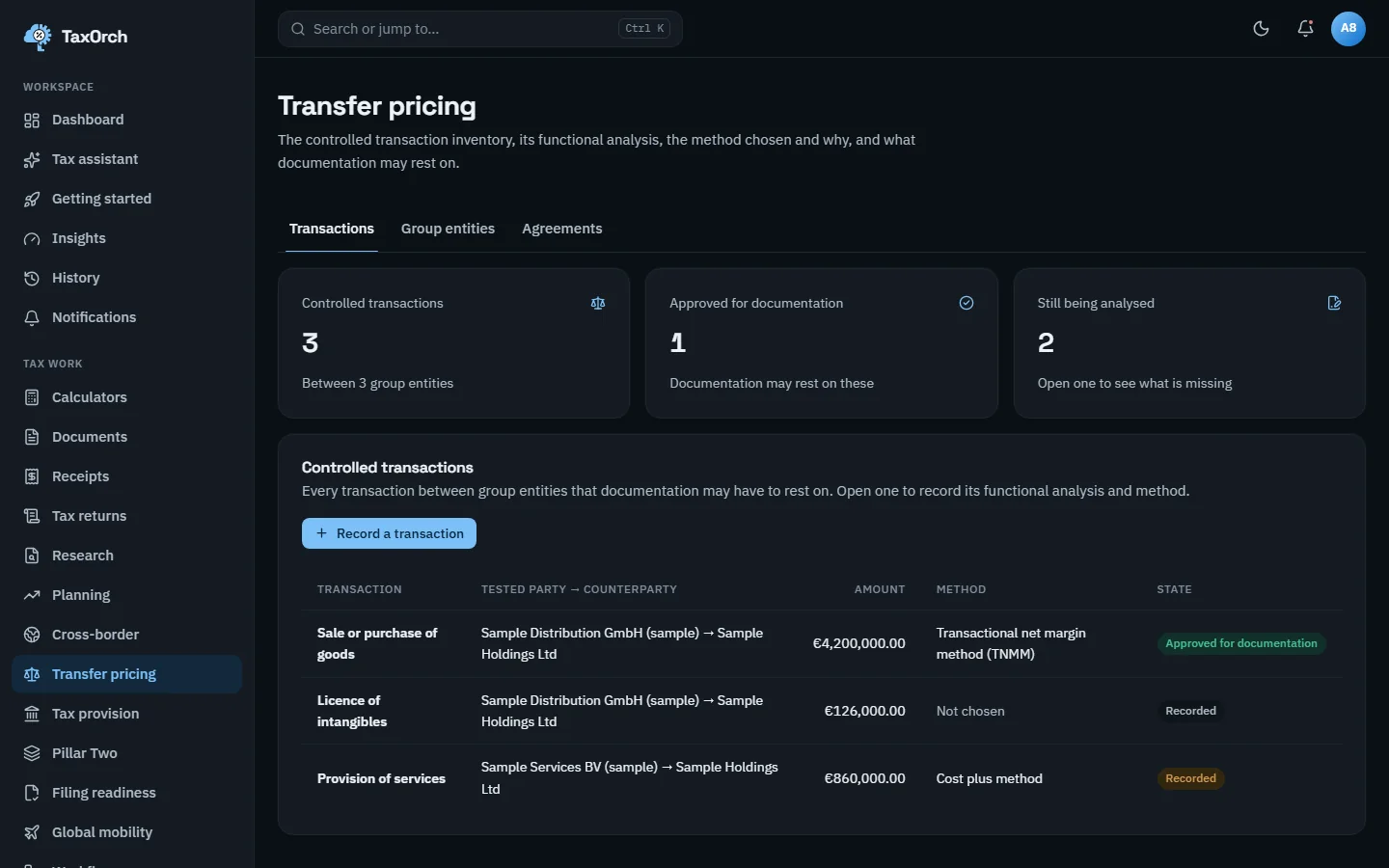
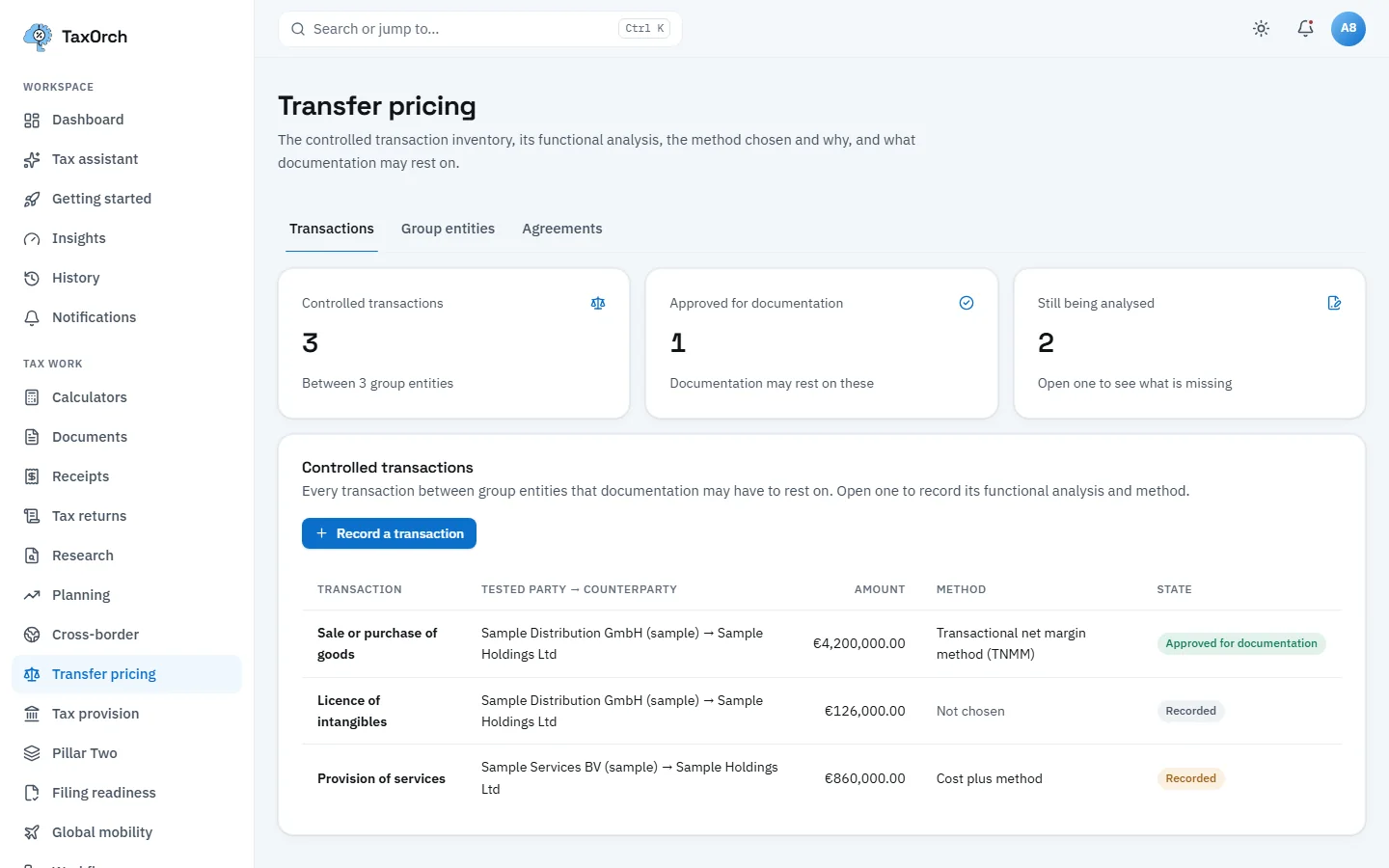
The controlled transaction inventory: three transactions, one approved for documentation.
Open a transaction and check completeness
Each transaction shows its tested party and counterparty with jurisdictions, period, amount, ledger account and agreement. The panel Is the analysis complete? counts functions, assets and risks, whether a benchmarking study is linked, and what is outstanding. The goods transaction is Complete: two functions, two assets, two risks, study linked, nothing outstanding.
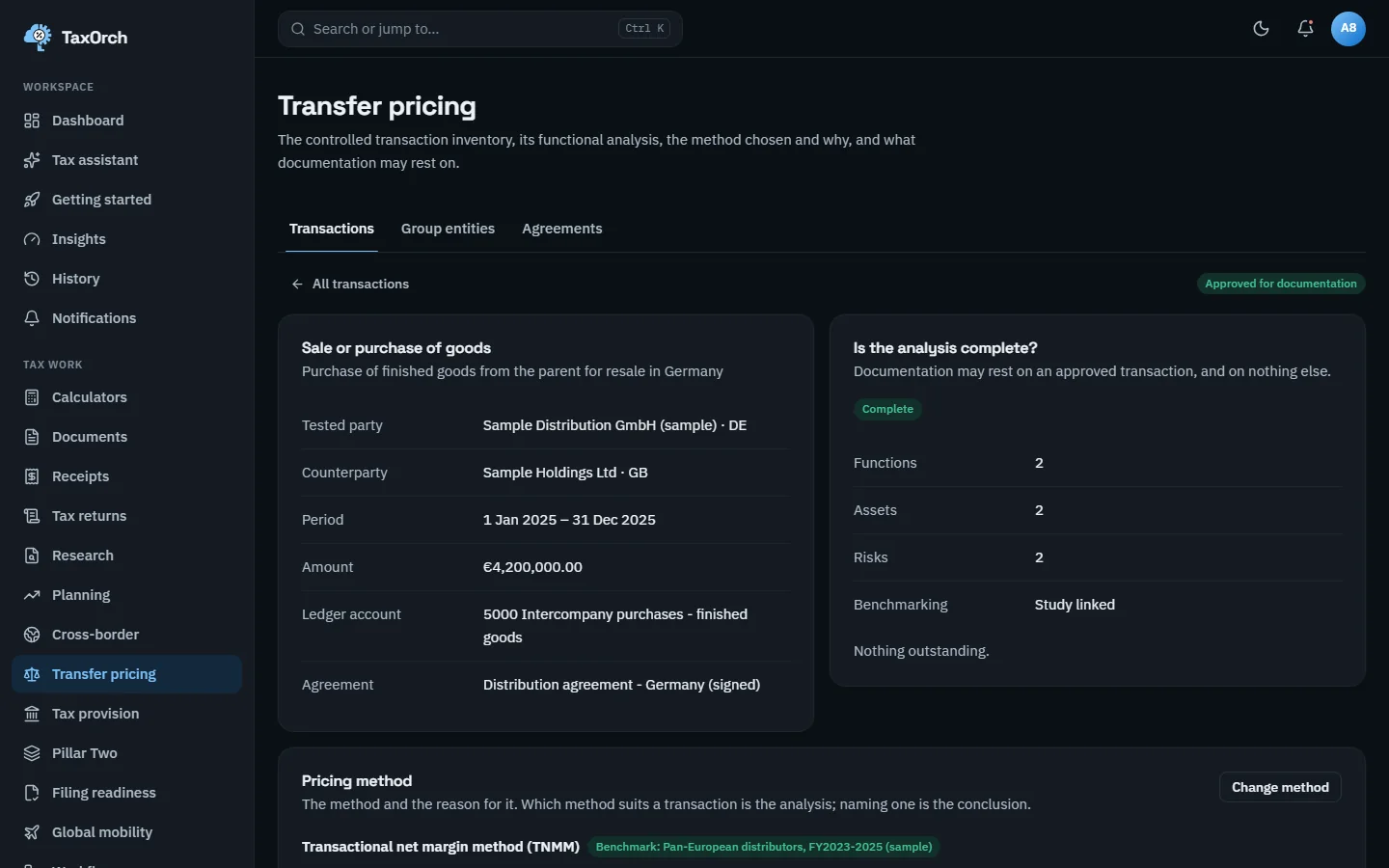
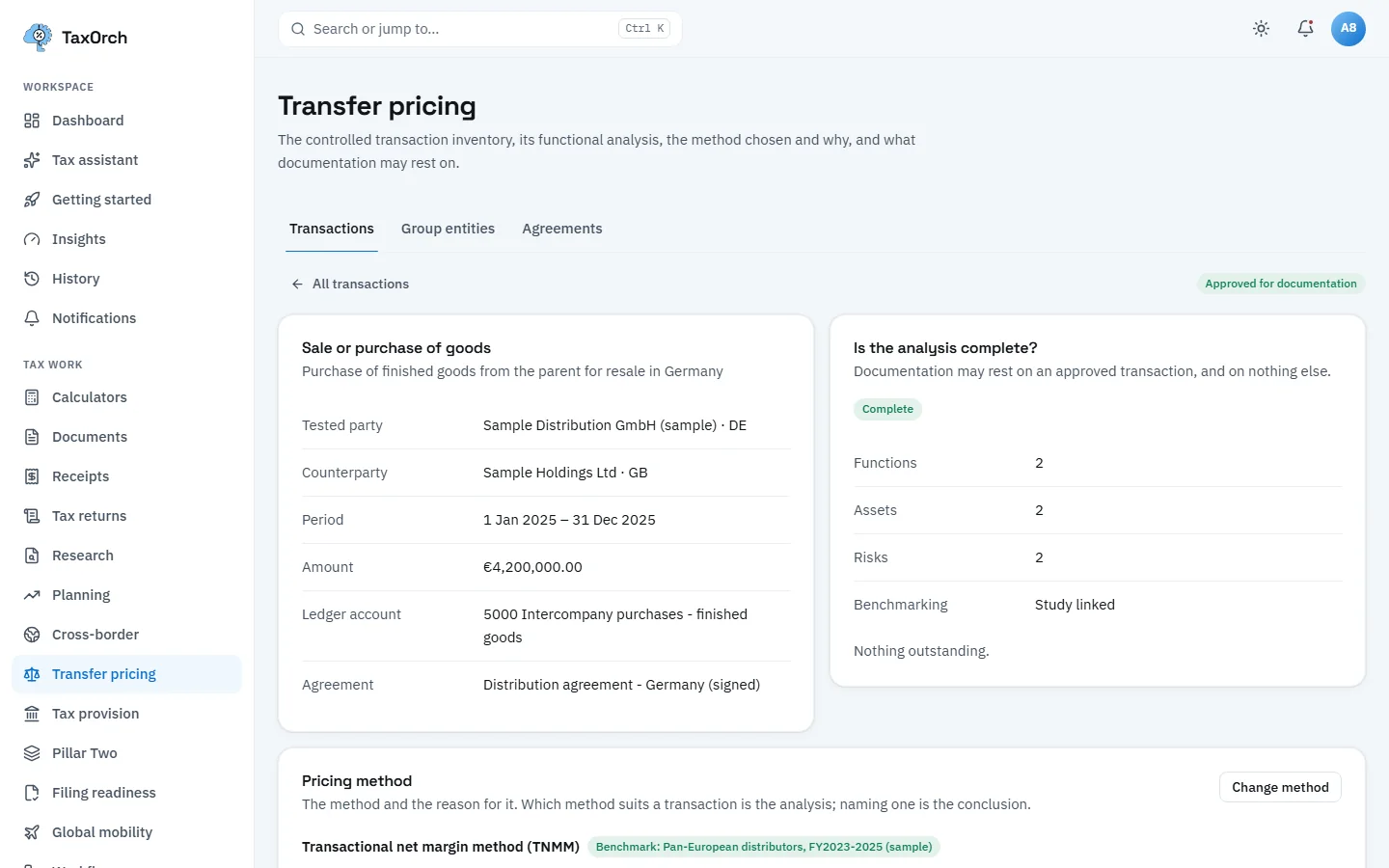
One transaction: parties, period, amount, agreement, and the completeness panel.
Complete the functions, assets and risks analysis
Add function, asset or risk records each item, the entity that performs, owns or bears it, and the evidence that shows it (a trade mark register extract, a CRM export, an org chart, a distribution agreement clause). Each row carries a Reviewed badge once checked. The pricing method sits above: TNMM, with the reason (a limited-risk distributor with no product intangibles, so operating margin is tested against independent distributors) and the linked benchmark.
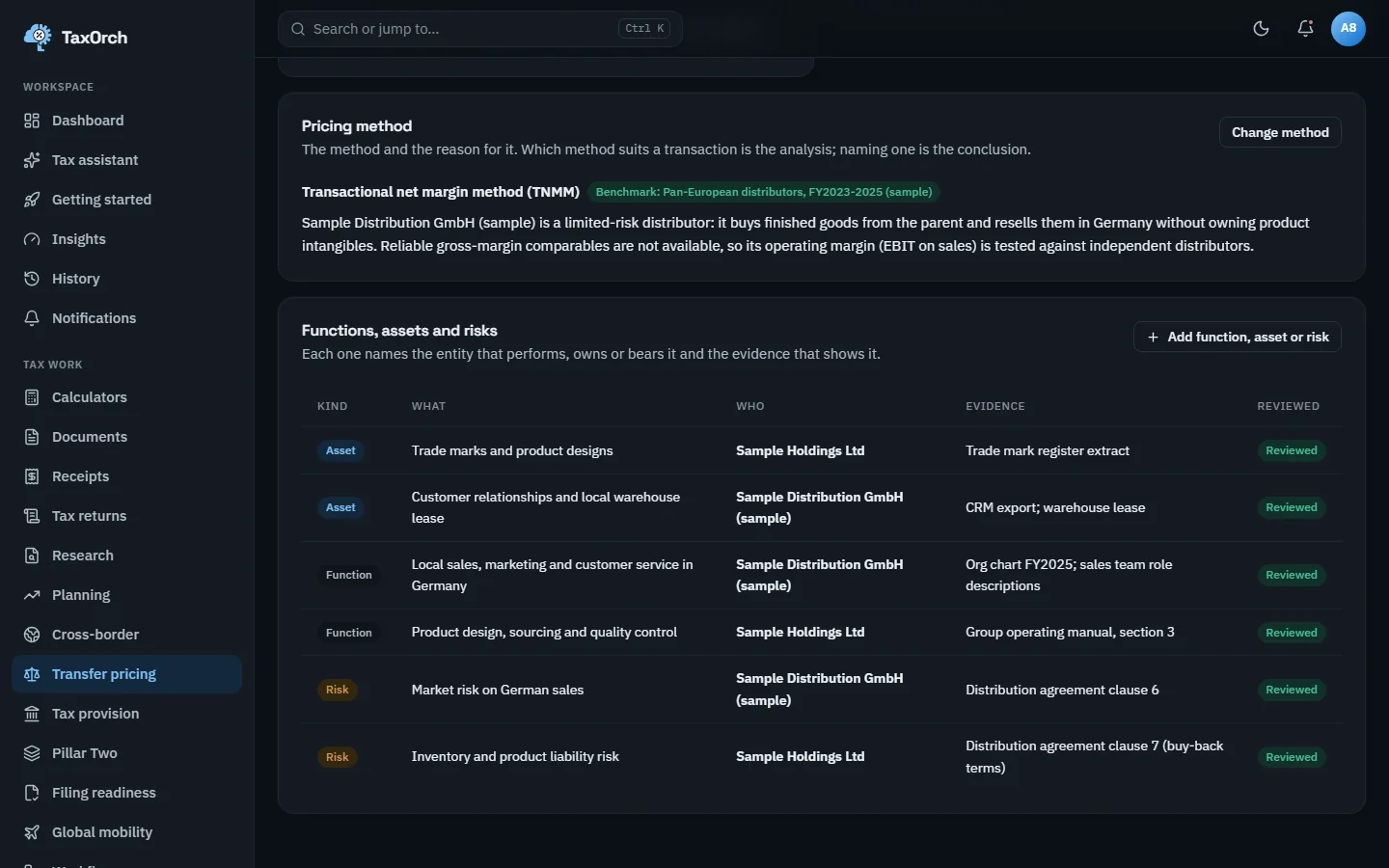
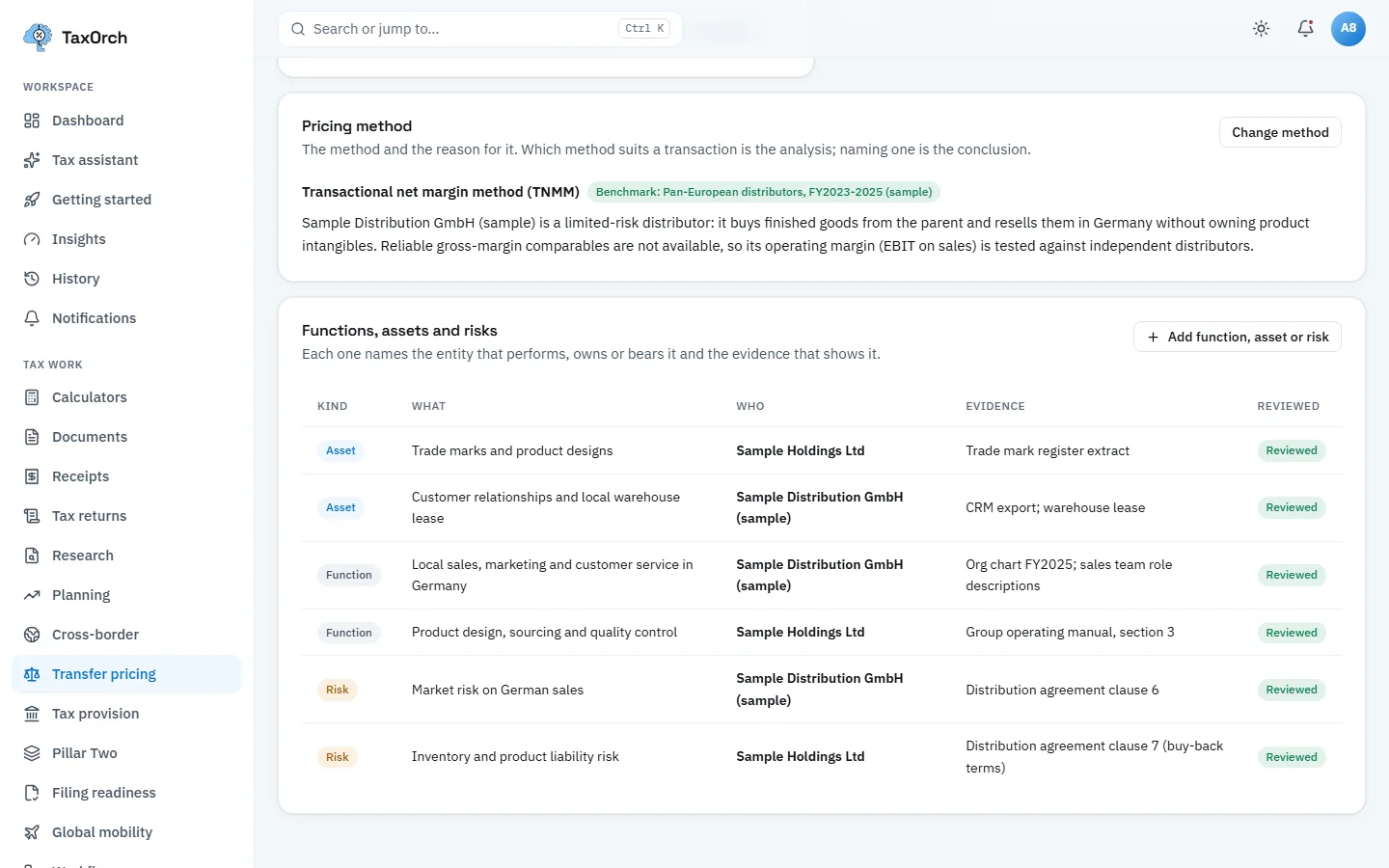
FAR analysis: each function, asset and risk with who holds it and the evidence, all reviewed.
Choose the method with its rationale and benchmark
Which method suits a transaction is the analysis; naming one is the conclusion. Change method records the choice and its reason. The services transaction uses cost plus (routine support services, limited risk, no unique intangibles, costs fully recorded) and carries a No benchmarking study linked badge, so it stays Recorded rather than approved. TaxOrch does not include a benchmarking database; you link your own licensed study.
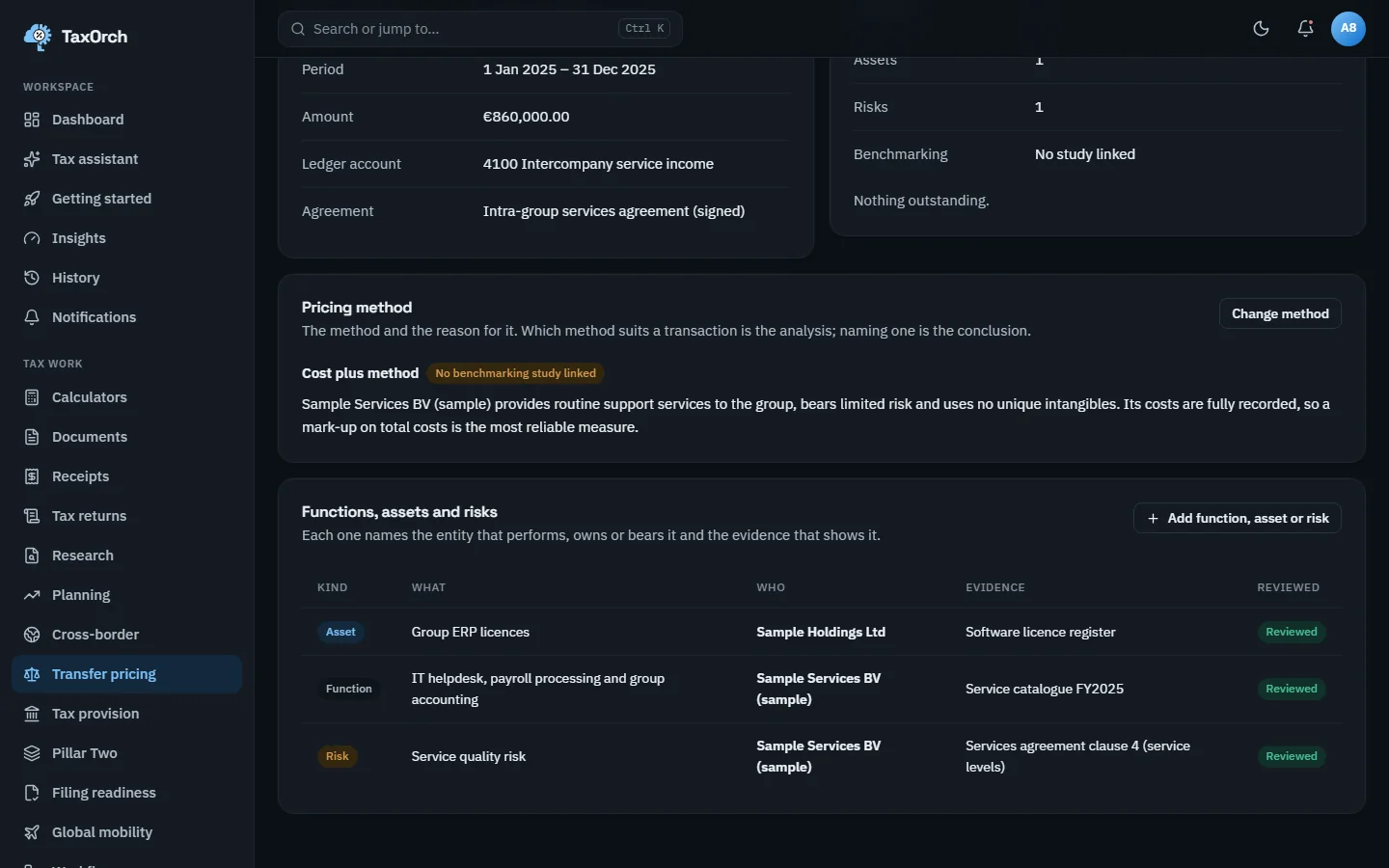
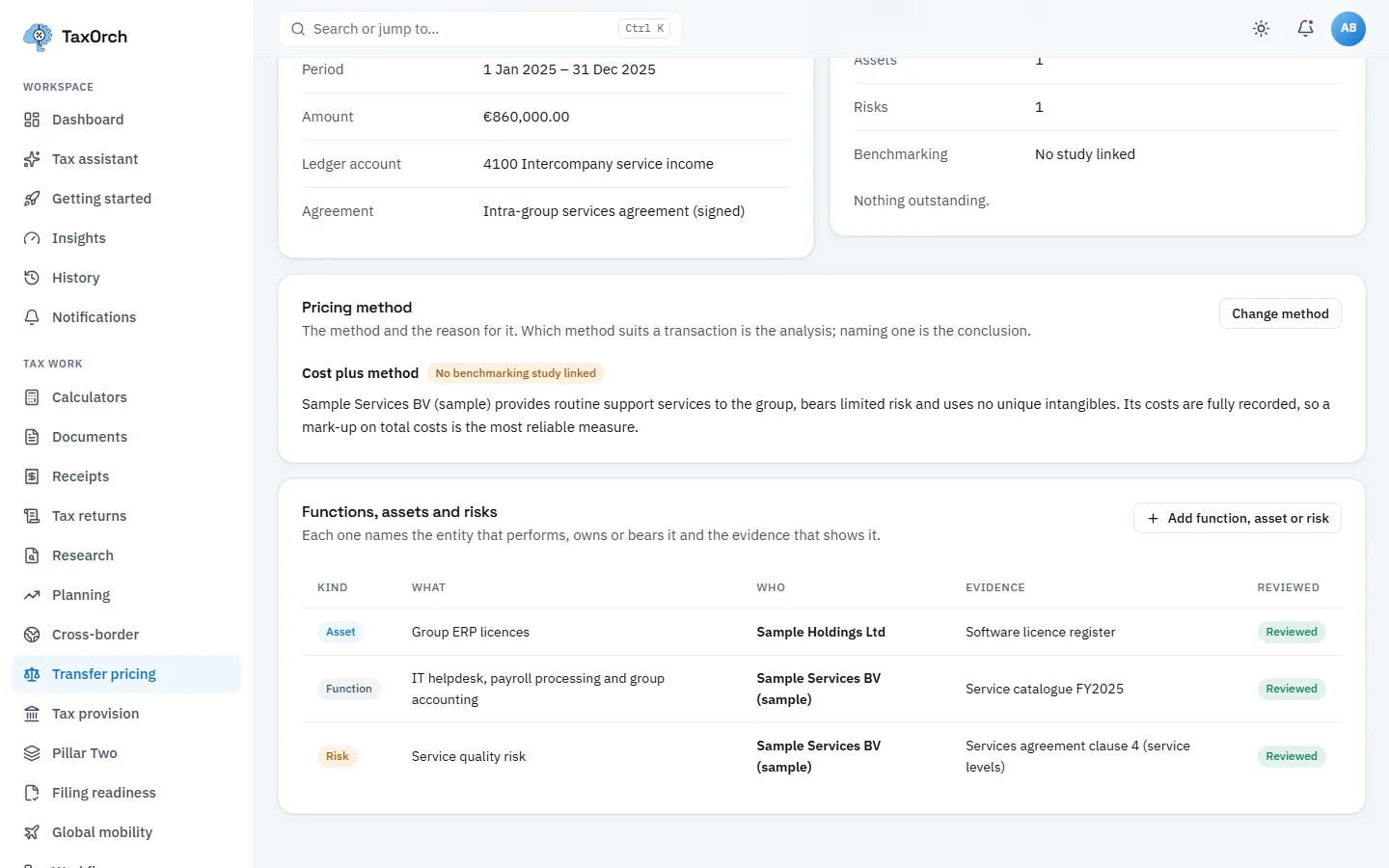
Cost plus with its rationale, and the honest badge: no benchmarking study linked yet.
Tips
- Attach the evidence to each FAR row as you record it; a row without evidence blocks approval.
- Record the reason for the method in a sentence a tax authority could read.