
AI tax research with citations
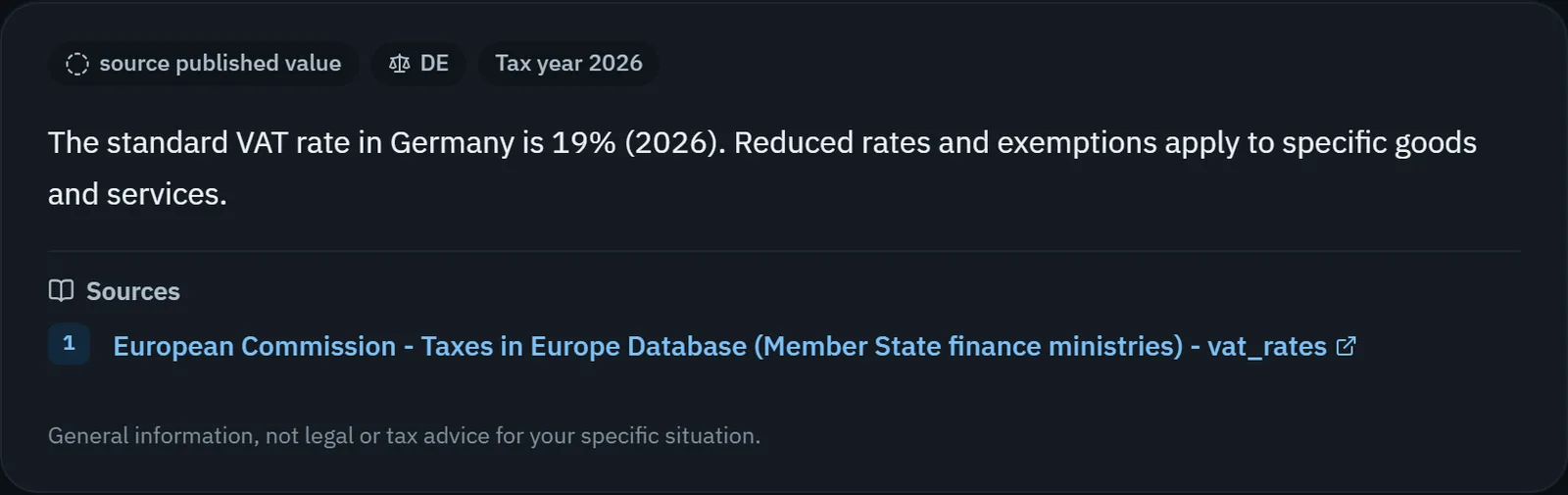
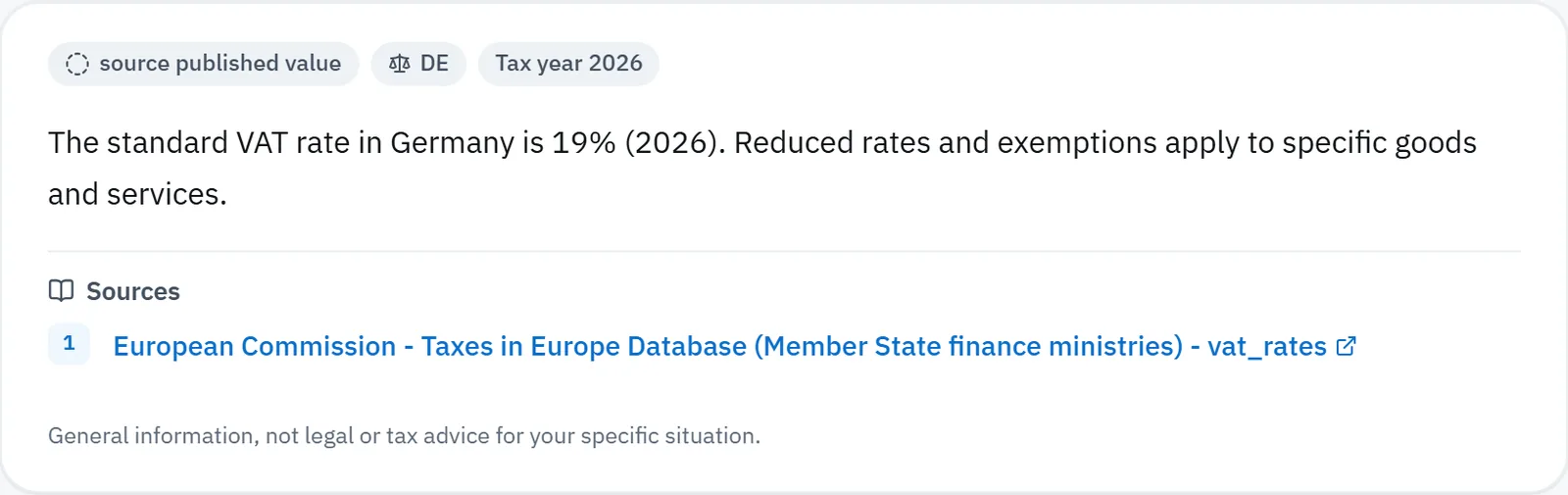
AI tax research with citations means every figure in an answer names where it came from: the tax authority or official publication and the tax year. TaxOrch answers from official sources and refuses, saying what is missing, when no source supports an answer — so you check the citation instead of re-researching the question.
How TaxOrch does it
Ask in plain language
Ask about rates, thresholds, withholding or treaty positions for the country and year you work in.
Every figure cited
Each figure carries its source and tax year, so it can be checked in seconds.
Refusal over invention
Where no official source supports an answer, TaxOrch says so rather than producing a plausible number.
Into the engagement
Research done for a client is kept with the engagement and flows into its workpapers.
Questions buyers ask
Does TaxOrch make up tax figures?
Figures come from official sources with their year cited. When there is no source, the answer says so instead of estimating.
Which countries does research cover?
Coverage differs by country and topic; the coverage page shows what is available for each country.
Can I use the answer in client advice?
Answers are a researched starting point with sources to check. Professional judgement and sign-off stay with you.
Bring one engagement and check the file.
Not a demo of a happy path — a real matter, worked through to a pack, so you can look at what a reviewer would actually see and decide whether it holds.
Decision support, not tax advice. A professional reviews before anything is filed.